

 Spine Support


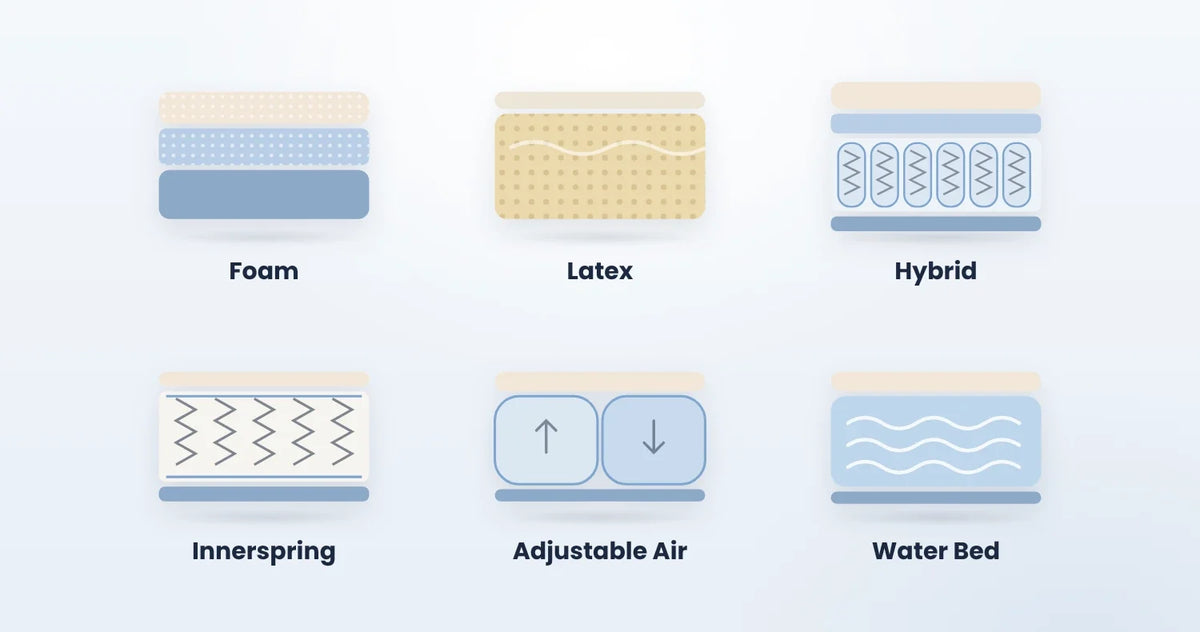
Choosing the right mattress starts with understanding how each mattress type feels, supports the body, and fits your sleep habits. From memory foam and hybrid mattresses to latex, innerspring, adjustable air, and water beds, every design offers a different balance of pressure relief, spinal support, motion isolation, airflow, and long-term comfort.
A mattress is more than a place to sleep. It can affect spinal alignment, pressure relief, temperature comfort, motion transfer, and how rested you feel when you wake up. With so many mattress types on the market, the best choice is not always the one with the most features. It is the one that fits your body, sleep position, comfort preference, and budget.
This guide breaks down the most common types of mattresses, explains who each option is best for, and gives you a simple framework for choosing the right mattress with more confidence.
Foam Mattresses
Foam mattresses are typically made with memory foam, polyurethane foam, or a combination of comfort foams. They are best known for their close body-contouring feel. Instead of pushing back with a lot of bounce, foam gently responds to body weight and pressure.
Memory foam can be especially helpful for sleepers who want cushioning around the shoulders, hips, and lower back. It is also popular with couples because foam absorbs movement well.
Pros
- Body Contouring: Foam cradles the body and helps reduce pressure buildup around sensitive areas.
- Motion Isolation: Foam absorbs movement, which can help partners sleep more peacefully when one person changes positions.
Cons
- Heat Retention: Traditional memory foam can trap body heat. Hot sleepers may prefer gel memory foam, breathable foam layers, or a cooling hybrid design.
- Less Bounce: Foam usually feels less responsive than latex, hybrid, or innerspring mattresses.
Best For: Side sleepers, couples, pressure relief, and sleepers who prefer a cushioned, body-hugging feel.
Latex Mattresses
Latex mattresses are made with natural latex, synthetic latex, or a blended latex foam. Compared with memory foam, latex usually feels more responsive and buoyant. It contours to the body, but it does not create the same slow-sinking sensation.
Natural latex is often chosen by shoppers who value durable materials and a more eco-conscious sleep surface. Latex mattresses are usually more expensive than standard foam beds, but high-quality latex can be long-lasting.
Pros
- Durability: Latex is known for strong long-term resilience and can often outlast lower-density foam.
- Responsive Support: Latex offers pressure relief while still making it easier to move and change positions.
- Breathability: Latex tends to sleep cooler than traditional memory foam, especially when paired with breathable covers.
Cons
- Higher Price: Natural latex mattresses often cost more than foam or entry-level hybrid mattresses.
- Heavier Build: Latex beds can be difficult to move, rotate, or set up without help.
Best For: Back sleepers, side sleepers, combination sleepers, and shoppers who want durable, responsive comfort.
Hybrid Mattresses
Hybrid mattresses combine a coil support system with comfort layers such as memory foam, latex, or specialty cooling foam. Many modern hybrids use individually wrapped pocket coils, which help support the body while reducing motion transfer.
For many U.S. shoppers, a hybrid mattress is the most balanced choice because it can deliver cushioning, airflow, edge support, and stable spinal alignment in one design.
Pros
- Balanced Comfort: Hybrid mattresses combine pressure relief on top with steady support underneath.
- Better Airflow: The coil system leaves more room for air to move through the mattress, which can help with temperature regulation.
- Edge Support: Many hybrids include reinforced edges, giving couples more usable sleeping space from side to side.
- Versatility: A well-built hybrid can work for side, back, stomach, and combination sleepers depending on firmness.
Cons
- Weight: Hybrid mattresses can be heavier than all-foam beds because of the coil system.
- Price Range: Premium hybrids may cost more, especially when they include advanced cooling or zoned support features.
Best For: Most sleepers, couples, combination sleepers, hot sleepers, and anyone looking for a balance of support and pressure relief.
Innerspring Mattresses
Innerspring mattresses use coils as the primary support system. They usually feel bouncier and more responsive than foam mattresses. The coil type, coil count, gauge, and comfort layer thickness all influence how supportive or firm the mattress feels.
Traditional innerspring mattresses remain a familiar, budget-friendly option, but they usually offer less contouring than foam or hybrid mattresses.
Pros
- Responsive Feel: Innerspring mattresses make it easy to move around, which some back and stomach sleepers prefer.
- Airflow: The open coil structure promotes breathability and can help the bed sleep cooler.
- Affordability: Many innerspring mattresses are more budget-friendly than latex or premium hybrid options.
Cons
- Limited Pressure Relief: Thinner comfort layers may not cushion shoulders and hips as well as foam or hybrid designs.
- Motion Transfer: Some innerspring beds transfer more movement across the mattress surface.
- Shorter Comfort Life: Lower-quality innersprings may lose comfort faster than higher-density foam, latex, or well-built hybrids.
Best For: Back sleepers, stomach sleepers, guest rooms, and sleepers who prefer a firmer, springier mattress feel.
Adjustable Air Mattresses
Adjustable air mattresses use internal air chambers that can be inflated or deflated to change firmness. Some models allow each side of the bed to be adjusted separately, which can be useful for couples with different comfort preferences.
These beds are different from temporary camping air mattresses. Higher-end adjustable air beds are designed for everyday sleep, while basic inflatable mattresses are better for short-term use.
Pros
- Customizable Firmness: Sleepers can adjust the feel to suit their position, comfort preferences, or changing support needs.
- Partner Flexibility: Dual-zone models allow each sleeper to choose a different firmness setting.
- Easy Short-Term Storage: Basic air mattresses can be deflated and stored when not in use.
Cons
- Maintenance: Air chambers, pumps, and controls may require more maintenance than standard mattress designs.
- Potential Air Loss: Leaks or pressure changes can affect comfort over time.
- Temperature Sensitivity: Air inside the mattress can feel cooler or warmer depending on the room environment.
Best For: Couples with different firmness preferences, sleepers who want adjustable comfort, and temporary guest setups.
Water Beds
Water beds use a water-filled chamber to create a floating, pressure-relieving feel. They were more common in past decades and are now a niche option, but some sleepers still enjoy the unique sensation of support.
Because water beds are extremely heavy when filled, they require a compatible frame and careful setup.
Pros
- Pressure Relief: The water chamber can reduce pressure buildup by distributing body weight evenly.
- Adjustable Feel: Some water beds allow sleepers to adjust the fill level or wave control.
Cons
- Compatibility: Water beds require a sturdy, compatible frame and may not work in every home or apartment.
- Maintenance: They may require water treatment, periodic adjustments, and leak prevention.
- Limited Availability: Water beds are less common than foam, hybrid, latex, and innerspring mattresses.
Best For: Sleepers who specifically prefer a floating feel and have the right frame and setup for a water bed.
Mattress Types Compared
If you are comparing mattress types side by side, focus first on feel, support, cooling, and who the mattress is designed to help most. The table below provides a quick overview before you move on to the more detailed buying factors.
This comparison is a helpful starting point, but the best mattress type still depends on your body, sleep position, temperature needs, and whether you share the bed. Use the next section to match these details to the right comfort and support profile.
| Mattress Type | Feel | Key Benefits | Best For |
| Foam | Contouring | Pressure relief and motion isolation | Side sleepers and couples |
| Hybrid | Balanced | Support, airflow, edge stability | Most sleepers |
| Latex | Responsive | Durability and buoyant comfort | Eco-conscious and combination sleepers |
| Innerspring | Bouncy | Airflow and responsive support | Back and stomach sleepers |
| Adjustable Air | Customizable | Adjustable firmness | Couples with different comfort needs |
| Water Bed | Floating | Pressure relief and unique feel | Niche comfort preferences |
How to Choose the Right Mattress Type
The right mattress type depends on how you sleep, how your body needs support, and what comfort features matter most to you. Use the factors below to narrow your options before comparing specific models.
Sleeping Position
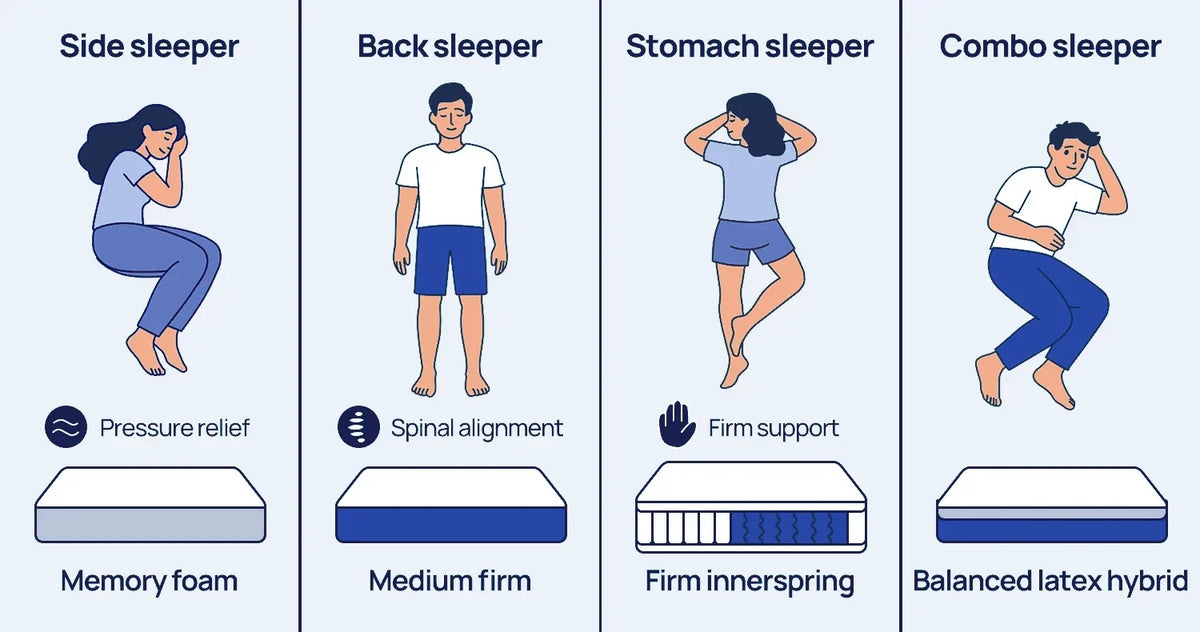
Side sleepers usually need more pressure relief at the shoulders and hips. Back sleepers often do best with balanced support that keeps the spine aligned. Stomach sleepers typically need a firmer surface to help prevent the midsection from sinking too deeply.
Firmness
Firmness is personal, but support is non-negotiable. A good mattress should feel comfortable while keeping your body lifted and aligned. Medium-firm to firm mattresses are often a strong starting point for back support, while softer comfort layers may help side sleepers.
Body Weight
Sleepers under 130 lbs may prefer a softer surface that allows enough contouring. Sleepers weighing 130 to 230 lbs often do well with medium-to-medium-firm support. Sleepers over 230 lbs may need stronger coils, denser foams, or reinforced edges for better durability and stability.
Temperature
If you sleep hot or wake up sweaty, look for breathable covers, cooling foams, airflow channels, and pocketed coils. Hybrid and cooling mattresses often perform better for hot sleepers than traditional all-foam designs.
Couples
Couples should look for motion isolation, edge support, and a comfort level both partners can tolerate. Memory foam and pocket-coil hybrids are both strong options for reducing movement across the bed.
Quick Mattress Type Decision Checklist
What is your primary sleep position: side, back, stomach, or combination?
Do you prefer a soft, medium, medium-firm, or firm mattress feel?
Do you need extra pressure relief for your shoulders, hips, or lower back?
Do you sleep hot or deal with night sweats?
Do you share the bed with a partner, child, or pet?
Do you need stronger edge support or easier movement on the mattress?
How long do you expect the mattress to last?
What is your realistic budget for a mattress you will use every night?
Final Thoughts
Choosing the right mattress type is a real investment in better sleep. Foam mattresses are great for contouring pressure relief. Latex mattresses offer responsive durability. Innerspring mattresses provide a classic, bouncy feel. Adjustable air mattresses allow customized firmness. Water beds serve a smaller group of sleepers who enjoy a floating sensation.
For many sleepers, a hybrid mattress offers the most complete balance of comfort, support, airflow, motion isolation, and edge stability. If you are not sure where to start, a well-built hybrid can be one of the most practical options for everyday sleep.
Explore BedStory hybrid mattresses to find a supportive, comfortable mattress that fits your body, sleep style, and bedroom.
Shop BedStory Hybrid MattressesFAQs
A medium-firm to firm mattress is often a good choice because it can help support natural spinal alignment. Many sleepers with back discomfort prefer hybrid mattresses because they combine stable support with pressure-relieving comfort layers.
Cooling hybrid mattresses are a strong option for hot sleepers because they combine breathable comfort materials with airflow from pocketed coils. Cooling covers, gel foams, and ventilated layers can also help improve temperature comfort.
It depends on what you need. Hybrid mattresses usually offer more bounce, airflow, edge support, and overall stability. Memory foam mattresses usually offer deeper contouring and stronger motion isolation.
Recommended Reading: Hybrid Mattress vs. Memory Foam: Which is Better for Your Sleep Style?Latex and high-quality hybrid mattresses are often known for durability, but lifespan depends on material quality, construction, body weight, use, and care.
Comfort is personal. Side sleepers may prefer softer pressure relief, while back and stomach sleepers may prefer firmer support. The most comfortable mattress is the one that matches your sleep position, body type, and preferred feel.